

Overturned Cross and Kyivan Gold: How Kyiv Saved Poland and Reshaped the Map of Europe
Blogs | 20 August, 2026 at 17:34 | 1,570 | Author: Olena Zelenina
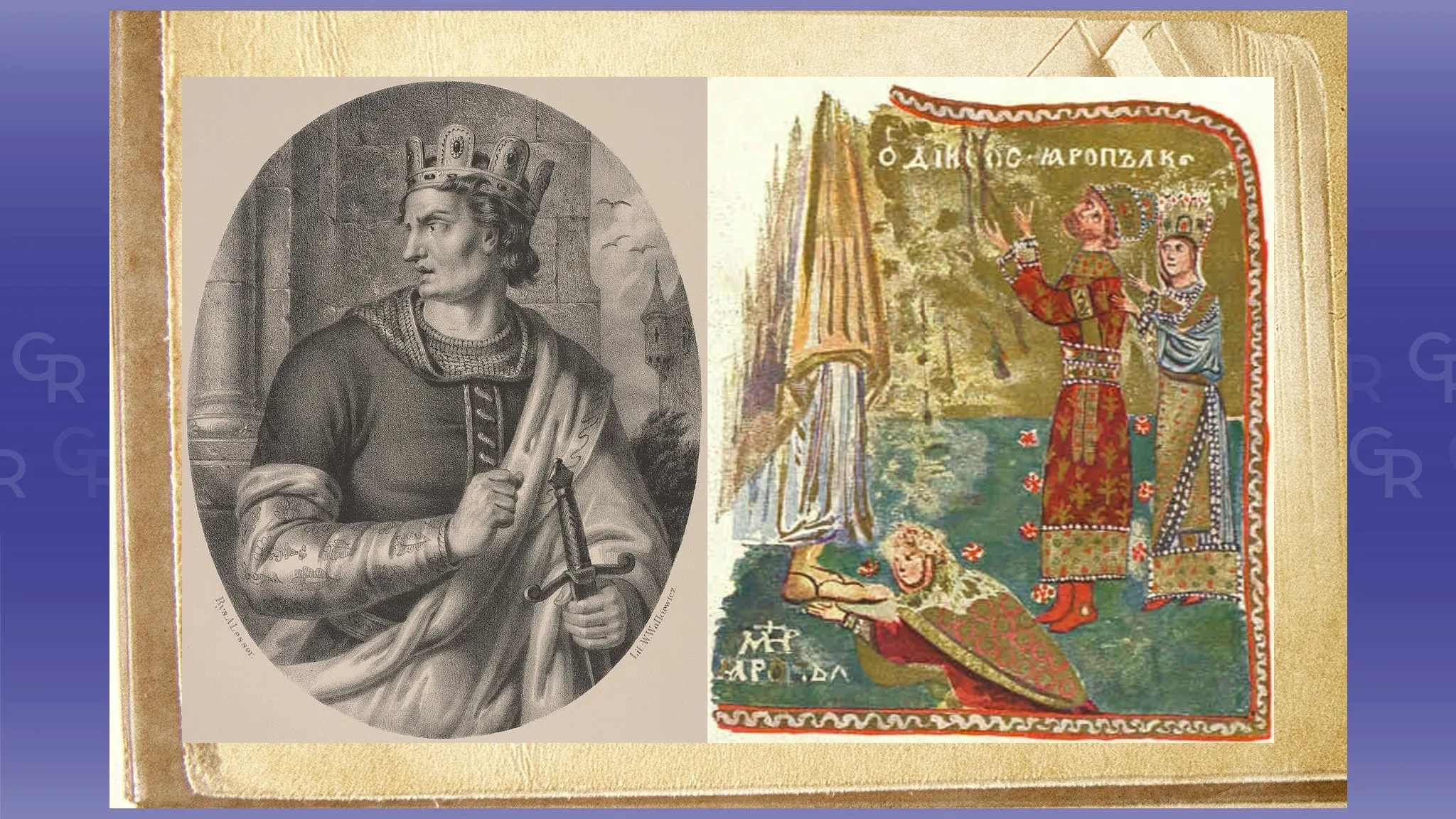
Collage by Olena Zelenina.
When I first stopped before this canvas in the halls of the National Museum in Wrocław, a museum silence reigned around me, yet a dull, anxious roar of antiquity seemed to resound from the canvas itself. A gloomy sky, over which a black raven ominously circles. In the foreground is a shattered wooden cross thrown into the mud, beneath which lies the body of a slain priest…
Beside him, an old warrior, hardened in campaigns, stretches out his hand, pointing out to a young rider the emptiness, the burned-out farmsteads, and the ashes. And on the horse is a prince in rich attire, who with deep sorrow and contemplation gazes upon the decline of his land.
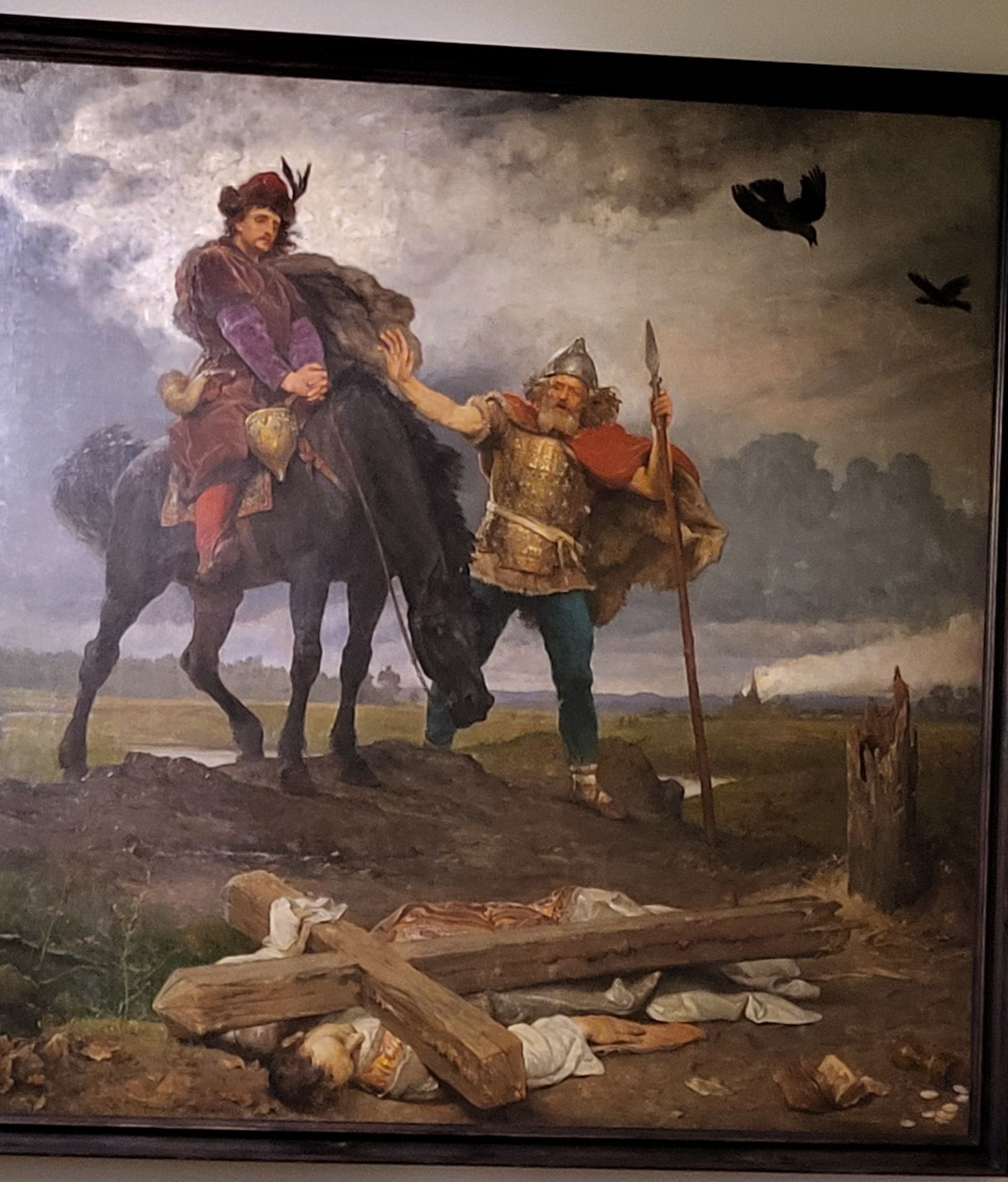
Looking at this majestic work by Wojciech Gerson, "Casimir the Restorer Returning to Poland" (1893), I noticed how confused and even helpless the young prince appears.
He looks upon the total ruin, upon this terrifying death of the cleric and the overturned cross—a symbol of downtrodden faith, shattered hope, and spiritual collapse. And then a question arose in my head: why did the artist paint the future great historical figure as so confused? After all, he entered history under the name "the Restorer"!
Yet a detailed dive into the historical context provides a clear and striking answer as to why the artist depicted the youth exactly this way. In these first moments on his native ashes, the prince still had no idea who would help him, or from where the saving force would even come.
Gerson masterfully captured the tragic 1030s. The land of the Piasts was ablaze: a pagan reaction destroyed Christian temples, peasant riots tore society apart, and the neighboring Czech prince Břetislav plundered the ancient capital, Gniezno. The Polish state was effectively falling to pieces, and its treasury was absolutely empty.
Casimir returned to glue the shattered country back together. But few museum visitors consider that the main driving force of this revival, and the answer to the prince's confusion, was help from the East—a powerful military-political and financial alliance with Kyivan Rus.
Summary of the Remaining Article The remainder of the article explores the critical alliance between Casimir and Kyivan Rus. Casimir sought aid from Grand Prince Yaroslav the Wise, which was solidified by a dynamic double marriage: Casimir married Yaroslav's sister, Maria-Dobronega, and Casimir’s sister, Gertrude, married Yaroslav's son, Izyaslav I.
A dedicated section highlights Maria-Dobronega, the daughter of Volodymyr the Great and potentially a Byzantine princess. She effectively became the co-founder of the Piast restoration, bringing a colossal dowry from Kyiv, a saving "Kyivan gold" that allowed Casimir to hire a professional army and restore state institutions. However, the article also notes a darker turn in relations, analyzing that this struggle was also a strategic battle for resources and economic dominance. Later, Casimir’s son, Bolesław II the Brave, cynically betrayed Gertrude and Izyaslav when they fled to Poland, seizing their massive grand-princely treasury—including massive gold vessels, regalia, and monetary funds.
The final section focuses on Gertrude of Poland, one of the most educated women of her time and the first known Polish author by name. After Bolesław's betrayal, she managed a brilliant diplomatic gambit, appealing directly to Pope Gregory VII. In 1075, she sent her son Yaropolk to Rome, recognizing Vatican supremacy in exchange for the Pope proclaiming Yaropolk "King of Rus" and issuing a bull for the Kyivan throne. This forced Bolesław II to reconcile with his relatives, return their stolen treasures, and provide troops for a second campaign to Kyiv. The article concludes by drawing dynamic parallels to the present, describing Ukraine as the "Eastern shield of Europe" and noting how dynastic marriages and diplomatic games with the Vatican show that Kyiv was always a powerful subject of great European politics.
Read more in the Ukrainian edition....

Comments
Some more relevant news for now